
ConneX structure
Device and system level
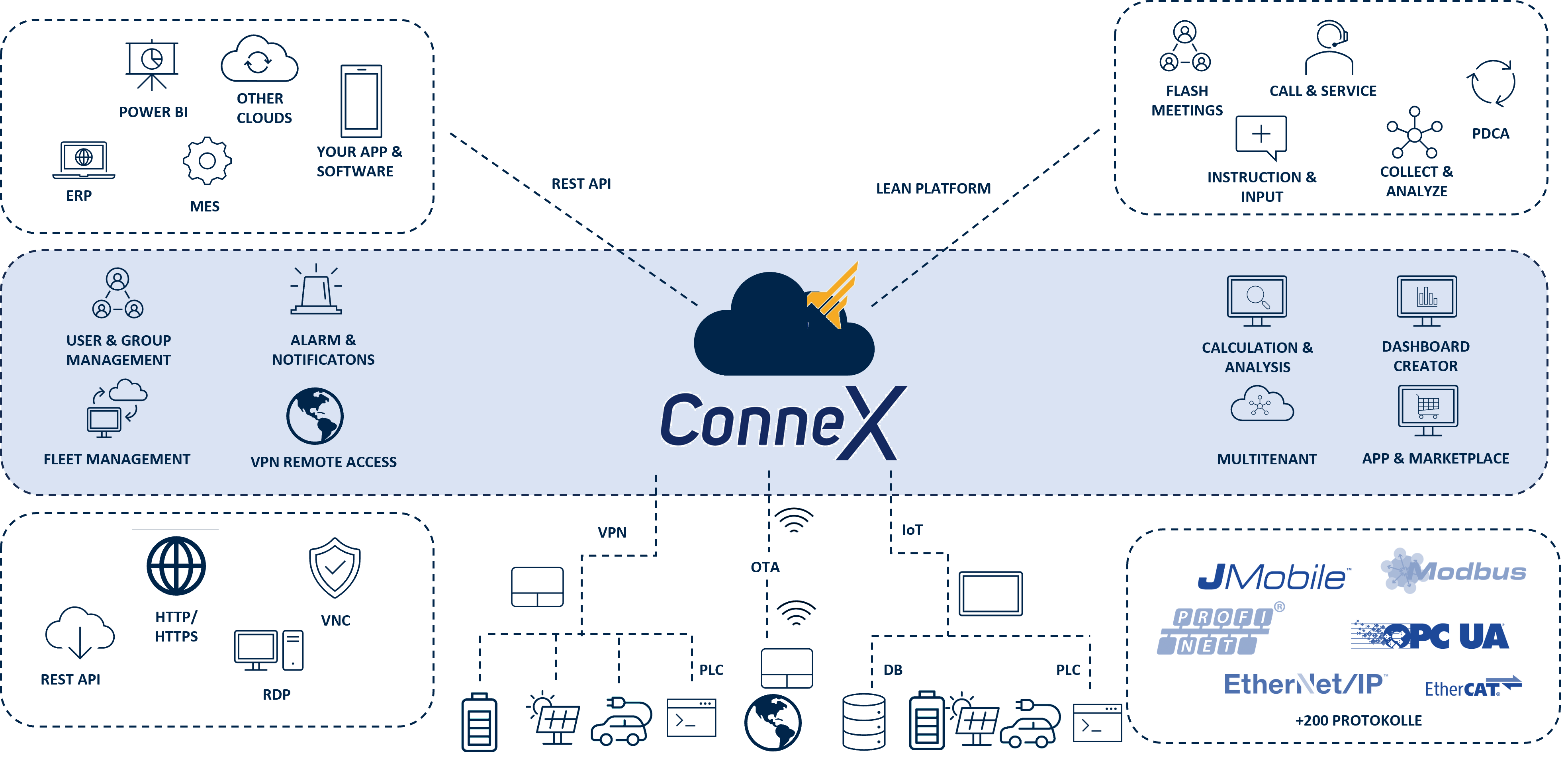
ConneX connects local systems such as energy management controllers, PLCs, meters, charging infrastructure and other IoT devices. Communication takes place via common industry protocols and standardized interfaces.
Secure communication
Data is exchanged between the system and platform via secure connections. Functions such as VPN, OTA updates and remote access enable secure and low-maintenance operation.
ConneX Portal
At the center is the Connex platform with functions for:
- User and rights management
- Alarms and notifications
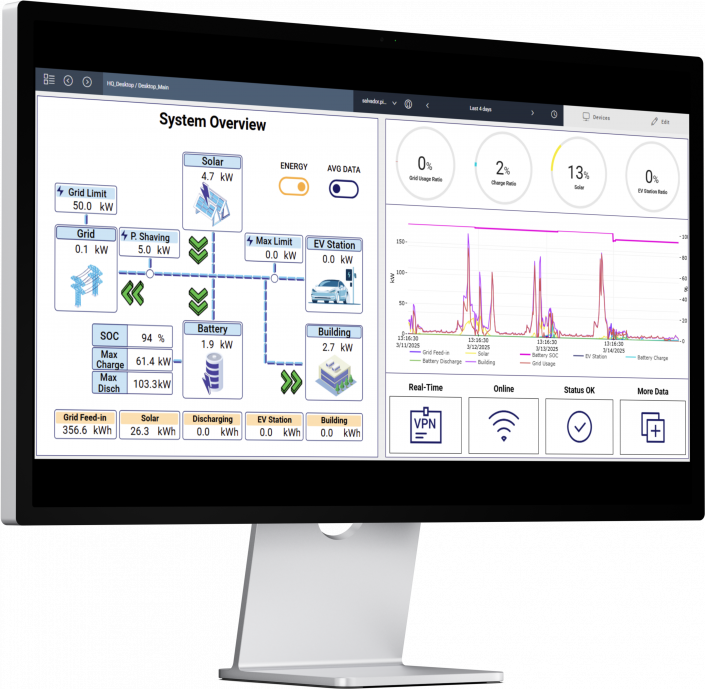
- Central monitoring and fleet management
- Calculation, analysis and dashboard creation
- Multi-client capability for different user groups
- and much more. …
Integration of external systems
Connex can be seamlessly integrated into existing IT landscapes via standardized REST APIs, e.g. ERP, MES or BI systems as well as customer-specific applications and cloud services.
Service & continuous improvement
ConneX supports ongoing operations with service functions such as analysis, feedback, optimization and structured service processes – for continuous improvement of energy systems.
Local user interface
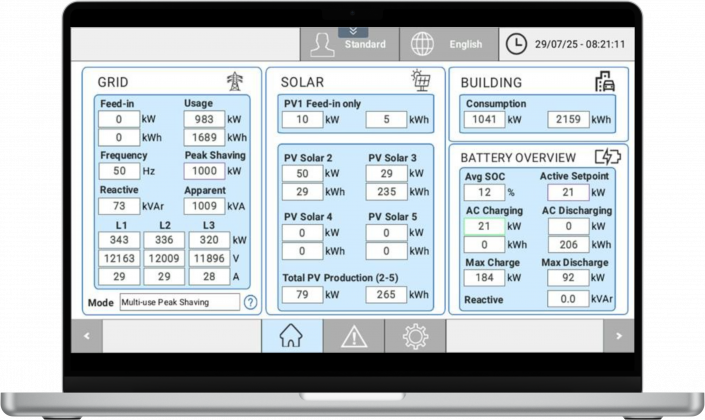
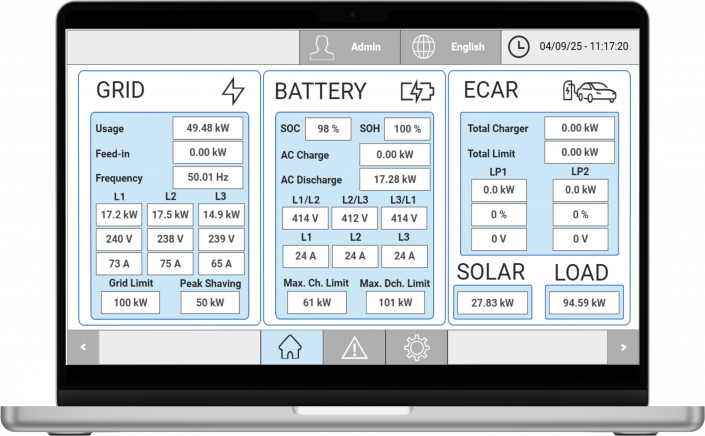
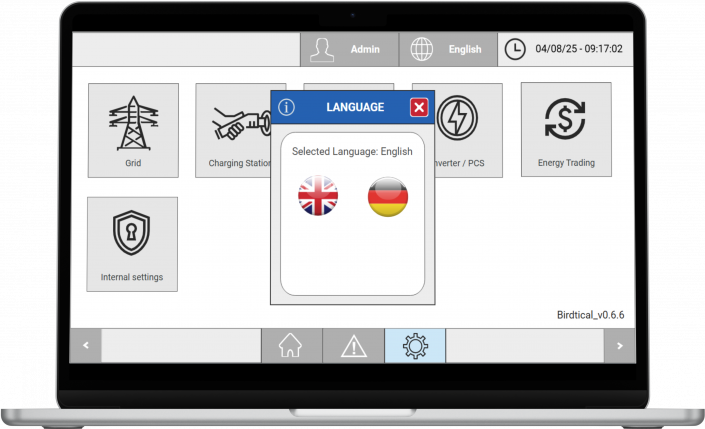
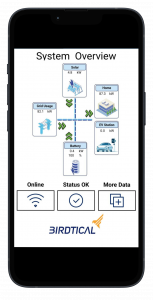
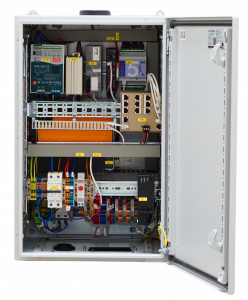
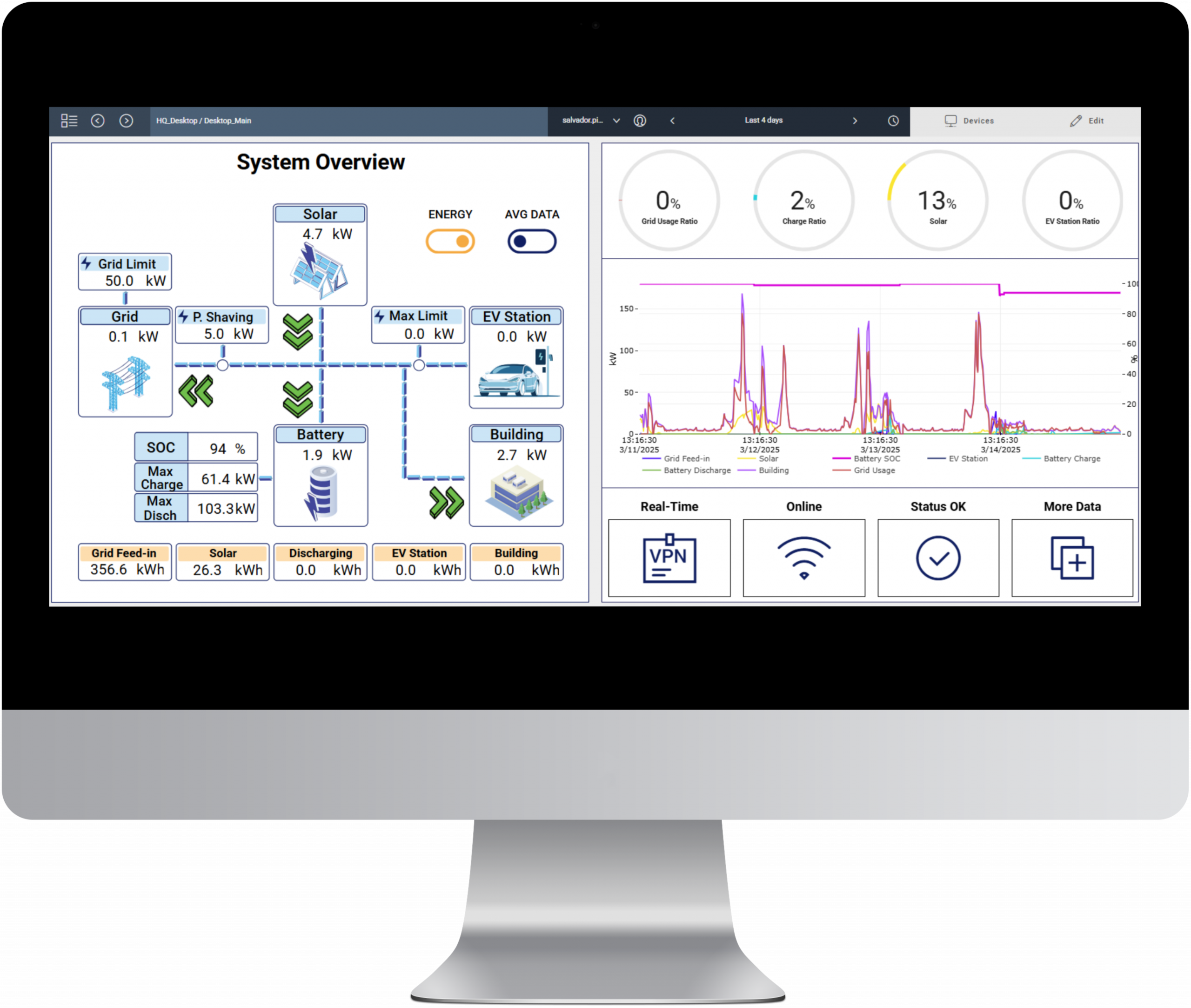
ArchiteX provides a local user interface directly on the system hardware. Operators and service personnel can use this interface to monitor energy flows in real time, view operating statuses and intervene in the control system in a targeted manner. The local UI is independent of the central platform and remains fully functional even if the internet connection is interrupted. This makes it ideal for commissioning, service, maintenance and ongoing system operation. All relevant components such as grid connection point, PV systems, battery storage, charging infrastructure and loads are clearly displayed and can be configured depending on the project.
Typical functions of the local UI
- Real-time display of energy flows and power
- Display of operating states and system limits
- Setpoints and limit values for load management and storage
- Local operation for commissioning and service
- Multilingual user interface
- Role-based access for operators and service